What is the IPDE Process for Driving?
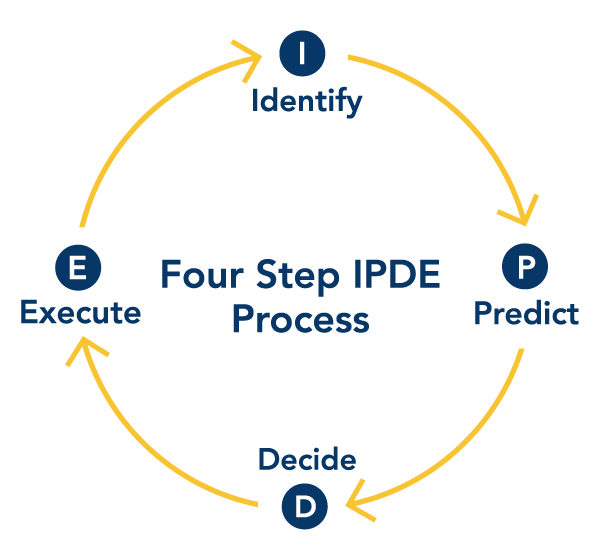
IPDE stands for Identify, Predict, Decide, and Execute. This is the step-by-step process behind the principles of defensive driving and complexities of visual perception in traffic. Driving is such a regular and routine part of our lives that we’re often figuratively asleep at the wheel. IPDE demands the driver engage in the strategic thinking and acting process when driving a vehicle.
At Top Driver, we incorporate the IPDE process into our Driver Intelligence™ curriculum to help develop proactive drivers who can anticipate and respond to potential hazards effectively. This systematic approach has proven invaluable in reducing accidents and building confident, safety-conscious drivers.
IPDE works hand in hand with the Smith System, a defensive driving method whose 5 Keys focus on where to look and how to position your vehicle.
Four Steps of the IPDE Process
1. I—Identify—Locate potential hazards within the driving scene.
In the first step of the IDPE process, the driver should survey the surrounding area for potential obstructions and deteriorating weather conditions. From approaching cyclists to a stopped vehicle parked curbside, identifying potential hazards is crucial to maintaining safety.
Visual Search Patterns and Scanning Techniques
Effective identification requires systematic visual scanning techniques that we teach in our driver education programs:
- The 12-Second Rule: Continuously scan 12 seconds ahead of your vehicle to identify potential hazards early.
- Mirror Checks: Check your mirrors every 5-8 seconds to maintain awareness of surrounding traffic.
- Peripheral Vision: Use your side vision to monitor activity in adjacent lanes and sidewalks.
- Systematic Scanning: Follow a pattern – check mirrors, scan ahead, check blind spots, repeat.
Understanding Open and Closed Zones
A critical part of identification involves evaluating zones around your vehicle.
Open Zones: Areas around your vehicle where you have a clear path of travel with no restrictions or hazards. For example:
- Clear highway lanes with good visibility
- Empty parking lots with no obstacles
- Residential streets with no parked cars or pedestrians
Closed Zones: Areas where your path of travel is restricted by hazards, obstacles, or other vehicles. Examples include:
- A lane blocked by a construction zone
- The space next to a parked car where a door might open
- An intersection where cross traffic is present
- Areas with poor visibility due to hills, curves, or weather
Reading Traffic Situations and Controls
Part of effective identification includes understanding:
- Traffic light patterns and timing
- Road signs and their implications for traffic flow
- Lane markings and what they indicate about upcoming changes
- Traffic control devices like roundabouts and four-way stops
Risk Factor Categories
We categorize potential hazards into three main areas:
Driver-Related Risk Factors
- Distracted drivers (texting, eating, adjusting radio)
- Impaired drivers showing erratic behavior
- Aggressive drivers following too closely or weaving
- Inexperienced drivers making unpredictable moves
Vehicle-Related Risk Factors
- Vehicles with mechanical problems (flat tires, smoking exhaust)
- Large trucks with limited visibility and longer stopping distances
- Motorcycles that can be easily overlooked
- Emergency vehicles requiring immediate right-of-way
Roadway/Environmental Risk Factors
- Weather conditions affecting visibility and traction
- Construction zones with changing traffic patterns
- School zones with children present
- Poor road conditions like potholes or debris
2. P—Predict—Judge where the possible points of conflict may occur.
It is important that drivers remain alert and actively attempt to predict other driver’s actions before they occur. Anticipating other driver’s movements allow you to formulate a proper response.
Time and Space Management for Prediction
Effective prediction requires understanding the time and space needed for various driving maneuvers:
- Following Distance: Maintain at least 3-4 seconds behind the vehicle ahead in normal conditions.
- Stopping Distance: Account for reaction time (1.5 seconds) plus braking distance.
- Merge Distance: Allow 4-6 seconds of clear space when changing lanes.
- Intersection Approach: Begin evaluating 6-8 seconds before reaching an intersection.
Dealing with Multiple Hazards
When facing multiple potential conflicts:
- Prioritize the most immediate threat first
- Adjust your speed to handle one hazard at a time when possible
- Create additional space and time by slowing down gradually
- Avoid making multiple evasive actions simultaneously
3. D—Decide—Determine what action to take, when, and where to take it.
If you anticipate a driver to change lanes or abruptly brake, think through an adequate response. Should you put more space between you and the other driver? Should you communicate to the other driver by utilizing your horn?
Checking Your Rear Zone
Before making any decision that involves slowing down or stopping:
- Always check your rearview mirror for following traffic
- Ensure adequate space exists behind you for safe deceleration
- Consider the reaction time needed by drivers behind you
- Adjust your response based on the following distance of other vehicles
Communication Methods with Other Drivers
Beyond horn usage, drivers can communicate intentions through:
- Turn Signals: Use early and consistently to indicate lane changes and turns
- Brake Lights: Gentle pressure to warn following drivers of upcoming stops
- Hazard Lights: When stopped or moving significantly slower than traffic
- Eye Contact: At intersections and when changing lanes (when safe)
- Hand Signals: As backup when electrical signals fail
- Positioning: Lane position can communicate your intentions
Identifying Escape Paths
Always maintain awareness of escape routes:
- Keep track of open lanes beside you
- Identify shoulder areas that could provide emergency space
- Note gaps in traffic that could accommodate evasive maneuvers
- Consider off-road escape options in extreme situations
4. E—Execute—Act by maneuvering the car to avoid conflicts.
With due caution, execute your decision. Decide swiftly what response is most appropriate for the situation in order to ensure your safety and the safety of those around you. The responses could include braking, accelerating, or a combination of multiple actions to safely navigate the situation.
Types of Execution Methods
Different situations call for different execution approaches:
Gentle Adjustments
- Minor steering corrections to maintain lane position
- Gradual speed adjustments to increase following distance
- Smooth lane positioning to avoid road hazards
- Light braking to adjust speed for traffic conditions
Emergency Maneuvers
- Hard braking when immediate stopping is required
- Evasive steering to avoid sudden obstacles
- Acceleration to escape dangerous situations (rare but necessary)
- Combination maneuvers like brake-and-steer for maximum effectiveness
Emergency Avoidance Techniques
- Threshold Braking: Apply maximum braking force without locking wheels
- Evasive Steering: Sharp but controlled steering to avoid obstacles
- Off-Road Recovery: Safely returning to the roadway after leaving the pavement
- 20
The key is matching your response intensity to the severity of the situation while maintaining vehicle control throughout the maneuver.
Benefits of the IPDE Process
The IPDE process can help you avoid collisions and is an ideal practice to become a proficient defensive driver. This is an excellent system that drivers can learn to implement instinctively and almost instantaneously when faced with a possibly dangerous situation on the road. At Top Driver, we’ve seen firsthand how mastering the IPDE process helps our students become more confident and safety-conscious drivers. Our Driver Intelligence™ curriculum emphasizes these skills through interactive scenarios and real-world practice.
Ask an instructor at Top Driver if the IPDE method is right for you.
If you’re interested in improving your driving knowledge and becoming a more proactive driver, contact Top Driver today or sign up for an online driving course.
Frequently asked questions
What does IPDE stand for?
IPDE stands for Identify, Predict, Decide, and Execute. It's a four-step decision-making process that underpins defensive driving, and Top Driver builds it into our Driver Intelligence curriculum. Instead of reacting to whatever happens, IPDE drivers actively scan for hazards, anticipate what other road users might do, choose a response, and carry it out smoothly. The process turns driving from passive routine into deliberate strategy, which is what reduces crashes and builds confident drivers.
How do I Identify hazards effectively?
Use systematic visual scanning. Apply the 12-second rule: continuously scan 12 seconds ahead of your vehicle so you spot problems early. Check your mirrors every 5 to 8 seconds. Use peripheral vision to watch adjacent lanes and sidewalks. Follow a repeating pattern: mirrors, ahead, blind spots, repeat. Look for closed zones (areas where your path is restricted by a hazard) versus open zones (clear paths). And categorize what you see into driver-related risks (distracted, aggressive, impaired drivers), vehicle-related risks (large trucks, motorcycles, emergency vehicles), and roadway/environmental risks (weather, construction, school zones).
What does the Predict step involve?
Predict means anticipating where conflicts could happen before they do. Effective prediction is built on time and space management: maintain at least a 3- to 4-second following distance in normal conditions, account for roughly 1.5 seconds of reaction time plus braking distance for stops, allow 4 to 6 seconds of clear space when changing lanes, and start evaluating intersections 6 to 8 seconds before reaching them. When multiple hazards exist at once, prioritize the most immediate threat first, slow down to handle one hazard at a time, and avoid stacking up evasive maneuvers.
What's involved in the Decide step?
Decide is where you pick a response: add space, change lanes, brake, accelerate, or communicate. Before any action that involves slowing or stopping, check your rearview mirror so you don't get rear-ended. Communicate intentions with turn signals used early, gentle brake taps to warn following drivers, hazard lights when stopped or moving much slower than traffic, eye contact at intersections when safe, hand signals as backup, and even your lane position. Always identify escape paths, open lanes beside you, shoulder areas, or gaps in traffic, so you have somewhere to go if the situation gets worse.
What's the Execute step?
Execute means actually carrying out the decision smoothly and with control. After you've identified the hazard, predicted the conflict, and decided on a response, the execution should be deliberate, not jerky. Smooth steering, smooth braking, and smooth acceleration keep your car stable and give the drivers around you time to read your action. Panicked, late execution often creates a second emergency on top of the first one. The whole IPDE process is designed to keep your final move calm because you saw it coming.
What's the difference between an open zone and a closed zone?
An open zone is the area around your vehicle where your path of travel is clear, with no hazards or restrictions, think a clear highway lane with good visibility, an empty parking lot, or a quiet residential street. A closed zone is an area where your path is blocked or limited by a hazard: a lane shut down by construction, the space next to a parked car where a door could swing open, an intersection with cross traffic, or any area with poor visibility from hills, curves, or weather. Constantly evaluating which zones are open and closed is how you keep an escape route available.